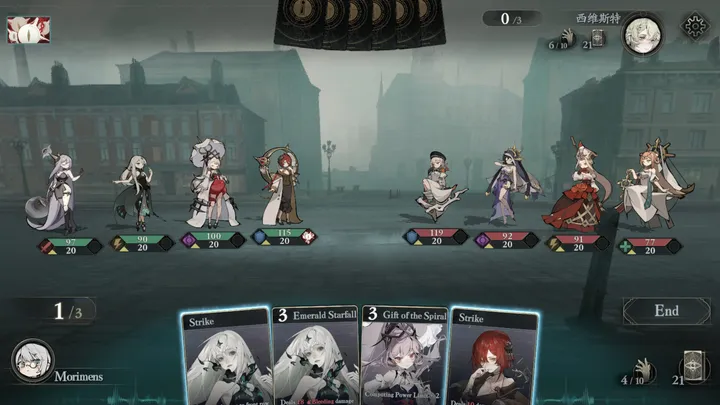



Morimens presents itself as a stylish, psychologically layered strategy RPG, where positioning, faction synergy, and timing define the battlefield. On the surface, it promises tactical depth and narrative immersion. However, beneath its sleek combat animations and character-driven storytelling lies a structural issue that quietly shapes the entire player experience: the heavy dependence on duplicate characters (shards) for awakening and late-game viability.
This article does not attempt to describe Morimens in general terms. Instead, it focuses on one specific systemic issue — the duplicate-based awakening model — and how it gradually shifts the game’s identity from strategic mastery to resource gambling. Over time, this system reshapes player behavior, restricts creativity, inflates power gaps, and introduces psychological fatigue that becomes most visible in late-game competitive modes.
We will trace this issue chronologically: from early-game invisibility, through mid-game strain, into late-game imbalance, and finally into long-term structural consequences.
1. Early Game Illusion: Awakening Feels Optional
At the beginning of Morimens, awakening appears to be a bonus rather than a requirement. The campaign difficulty curve is forgiving, and base versions of characters perform adequately with proper positioning and skill timing.
New players interpret awakening as long-term enhancement rather than immediate necessity. This creates a sense of fairness.
H3: Why the System Feels Harmless Early
- Campaign enemies lack stat pressure
- Base skills function without awakening nodes
- Early PvP brackets have low optimization
H4: The Perception of Strategy Dominance
Players attribute wins to smart unit placement and faction synergy rather than raw stat amplification.
At this stage, duplicates feel like luxury items.

2. Mid-Game Shift: Stat Checks Begin Appearing
As players transition into advanced campaign stages and higher-tier PvP, the design philosophy changes. Encounters begin including hard stat checks disguised as tactical challenges.
Bosses survive with slivers of health. Opponents outspeed by small margins. Sustain breaks down unexpectedly.
H3: Awakening Bonuses Stop Being Cosmetic
Awakening in Morimens often grants:
- Percentage stat boosts
- Cooldown reductions
- Additional passive triggers
- Enhanced skill multipliers
These are not minor increases — they fundamentally change performance ceilings.
H4: The First Wall
Players who lack duplicates begin noticing:
- Longer battle times
- Increased reliance on RNG
- Inconsistent PvP outcomes
The illusion of optional awakening fades.
3. The Design of Shard Acquisition
Morimens ties awakening to duplicate acquisition or shard fragments obtained primarily through gacha pulls and limited event rewards.
This creates a layered dependency system.
H3: The Shard Funnel
- Pull duplicate character
- Convert to shards
- Accumulate threshold for awakening tier
- Unlock stat and passive upgrades
H4: Controlled Scarcity
The rate of shard acquisition is intentionally throttled:
- Limited banner windows
- Diluted character pools
- Low pull probability for specific units
Progress becomes gated not by effort, but by availability.
4. Power Scaling Disparity Between Tiers
The real issue emerges when examining how awakening tiers scale.
H3: Non-Linear Power Growth
Awakening tiers often:
- Unlock new passives
- Alter skill behavior
- Add extra triggers
This creates non-linear growth — meaning awakened characters don’t just hit harder; they function differently.
H4: Base vs Fully Awakened
A fully awakened unit may:
- Cycle ultimates faster
- Survive burst rotations
- Apply debuffs more consistently
The difference is architectural, not incremental.

5. PvP Meta Compression
In competitive modes, awakening disparities become stark.
H3: Speed Thresholds and Damage Breakpoints
Awakened units often:
- Gain extra speed nodes
- Reach lethal thresholds
- Survive burst combos
A base-tier version cannot replicate this.
H4: Resulting Meta Narrowing
Players gravitate toward:
- High-duplication banner units
- Universally scalable damage dealers
- Sustain characters with upgraded passives
Team diversity shrinks.
6. The Psychological Weight of Incomplete Units
Owning a character without sufficient duplicates creates a subtle dissatisfaction.
H3: The “Almost There” Effect
Players feel:
- Incomplete progression
- Reluctance to invest resources
- Hesitation in building units
H4: Investment Paralysis
Because awakening drastically alters performance, players delay:
- Skill upgrades
- Gear optimization
- Synergy experimentation
This slows gameplay engagement.
7. Monetization Pressure and Duplicate Incentives
Duplicate-based systems inherently support spending cycles.
H3: Limited-Time Banner Urgency
- Fear of missing shard thresholds
- Increased spending during final banner days
- Emotional urgency
H4: Probability vs Expectation
Even paid attempts do not guarantee awakening completion.
Spending increases exposure to chance — not control over outcome.
This intensifies frustration.
8. Late-Game Progression Plateau
Once players have optimized gear and cleared PvE content, awakening remains the final differentiator.
H3: Horizontal Growth Ends
Without duplicates:
- Power stagnates
- Rank ceilings solidify
- Progress becomes static
H4: Farming Without Advancement
Grinding resources no longer yields meaningful growth if awakening gates remain closed.
Effort disconnects from improvement.
9. Strategic Depth vs Economic Depth
Morimens markets itself on tactical nuance, yet duplicate dependency shifts focus from decision-making to acquisition cycles.
H3: Strategy Undermined by Stat Gaps
A perfectly executed team composition cannot compensate for:
- Missing passive triggers
- Lower stat ceilings
- Reduced ultimate frequency
H4: List – Effects on Gameplay Identity
- Creativity decreases
- Risk-taking declines
- Meta reliance increases
- Experimental builds vanish
The system subtly discourages innovation.
10. Long-Term Structural Consequences
Over time, duplicate dependency reshapes player demographics and engagement patterns.
H3: Retention Imbalance
Highly invested players with awakened rosters dominate competitive spaces, while mid-spenders and free players face invisible ceilings.
H4: Design Trade-Off
Duplicate systems:
- Extend monetization lifespan
- Shorten strategic lifespan
The cost is subtle but cumulative.
Morimens becomes less about mastering combat systems and more about surviving acquisition probability.
The duplicate-based awakening system in Morimens is not a surface-level inconvenience. It is a structural force that redefines progression, competitive balance, and player psychology. What begins as optional enhancement transforms into mandatory power scaffolding. Over time, it compresses meta diversity, widens PvP gaps, and shifts agency from tactical mastery to probabilistic acquisition.
Morimens still possesses strong visual identity and combat potential. But until awakening becomes more effort-driven and less duplicate-dependent, the game will continue to struggle with a core tension: strategy promises agency, while shard dependency limits it.
True depth cannot flourish when power is locked behind repetition.