.webp)





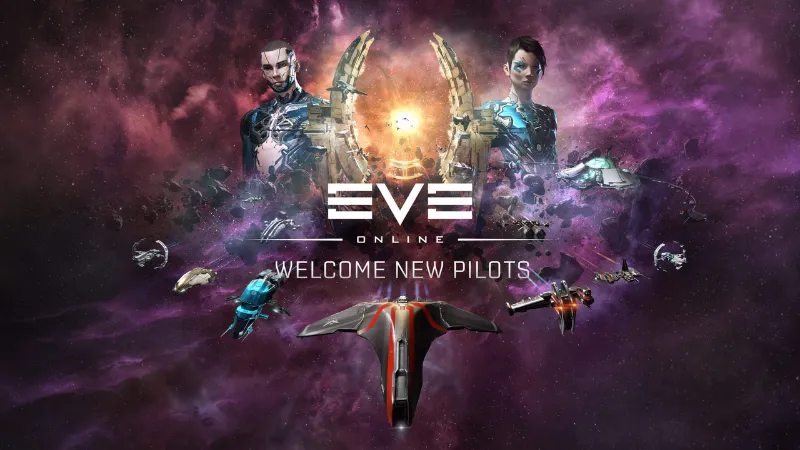
EVE Online is celebrated as a monumental achievement in the history of MMORPGs, largely due to its intricate and fully player-driven economy. However, starting in 2019, developer CCP Games made a controversial decision that would forever alter the game’s financial and industrial landscape: the Scarcity Era. This period, characterized by radical resource reductions, economic restructuring, and massive industrial rebalancing, sparked intense debate across the gaming community. By analyzing the trajectory from overproduction to restriction, we can understand the mechanics of virtual economies and the delicate balance between developer control and player freedom.
1. The Golden Age of Abundance and Resource Saturation (2016-2019)
The years leading up to 2019 were characterized by an unprecedented level of resource generation in the universe of New Eden. With the introduction of the Rorqual industrial capital ship and massive, easily accessible asteroid mining anomalies in null-security space, the game experienced a period of hyper-saturation. Trillions of ISK and countless minerals entered the economy daily, leading to the rapid deflation of raw material costs and the rapid inflation of asset prices. Supercarriers and Titans, once rare and prestigious symbols of immense wealth and power, became increasingly common and easily replaceable.
This hyper-abundance fundamentally broke the traditional mechanics of risk versus reward. Players could easily generate vast amounts of wealth in the safety of heavily defended Null-Sec space, creating an economic bubble. This ecosystem was heavily reliant on automated, multi-box mining setups, allowing a small subset of the player base to control the vast majority of the game's mineral supply.
The consequences of this saturation rippled throughout every sector of EVE's economy, leading to a realization by CCP Games that the game's foundation was no longer sustainable.
2. The Catalyst for Change: CCP Games and Economic Bloat
Recognizing the unsustainable trajectory of the economy, CCP Games decided to intervene. The developers observed that the game's virtual universe was heading toward total economic stagnation. In this environment, new players could not compete with established empires, and the server infrastructure was groaning under the weight of accumulated wealth and asset inflation.
The catalyst for change was not just a desire for developer control, but a necessity to ensure the long-term survival of the sandbox ecosystem. CCP Games’ CEO Hilmar Veigar Pétursson publicly acknowledged that the ecosystem needed a "reset" to restore true scarcity and make player actions and losses meaningful again.
The goal was to drain the accumulated reserves of materials and force players to seek out riskier avenues to maintain their empires.
3. Initial Iterations of Scarcity: Removing Rorqual Dominance and Ore Compression
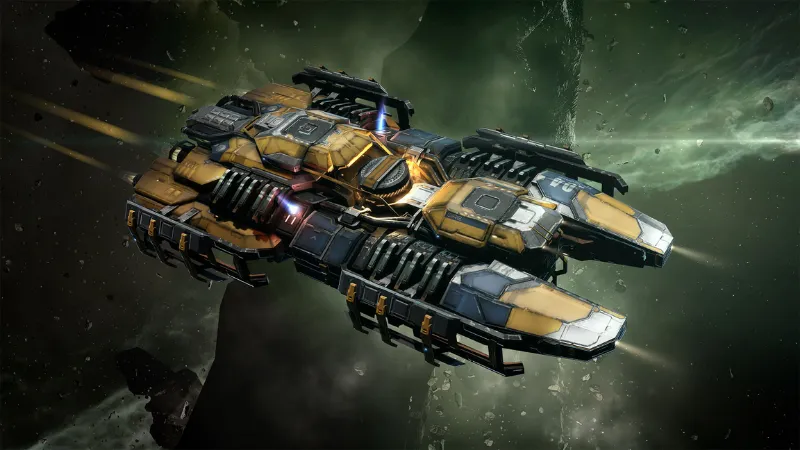
The initial phase of the Scarcity Era began in late 2019 with the targeted nerfing of the Rorqual. The ship’s mining yield and its ability to compress ore instantly were severely restricted, preventing massive industrial fleets from operating with impunity.
Additionally, CCP removed or reduced the massive asteroid belts and anomalies found in null-security space. This forced players to constantly hunt for resources, effectively destroying the passive, automated mining empires that had dominated the game for years.
Key Industrial Changes Implemented
- Reduction of anomaly sizes: Smaller asteroid fields that depleted much faster.
- Nerfed Rorqual yields: Reduced the excavator drone mining rate.
- Removal of moon ore compression in space: Forced reliance on specialized, vulnerable structures.
4. Dynamic Distribution Systems and Resource Migration
Following the initial nerfs, CCP Games introduced the Dynamic Distribution System (DDS), a feature designed to continuously move resources around the galaxy. Instead of being concentrated in specific, secure, and established regions, minerals were dynamically shifted to different solar systems based on player consumption.
This mechanism was intended to force players to travel, explore, and fight over new resource-rich zones, injecting conflict into an otherwise static null-security environment. However, this implementation was met with severe frustration by industrial alliances that relied on predictable resource pipelines.
The dynamic changes meant that a region's economic output could fluctuate wildly from week to week, causing logistical nightmares for large and small organizations alike.
5. The Industry Rebalance and Material Requirements Transformation
Scarcity extended far beyond the extraction of raw ores from the game's asteroid belts. In mid-2021, CCP Games launched the massive Industry Rebalance, which changed the blueprint requirements for almost every ship in the game, particularly high-end capital and supercapital vessels.
The rebalance required players to use a much wider variety of materials, including gases, moon ores, and planetary interaction products, making the construction of ships significantly more complex and resource-intensive than it had been in the previous decade.
Consequently, the prices of ships, modules, and capital vessels skyrocketed. This fundamentally altered the way alliances engaged in large-scale warfare and territorial defense, as replacement costs were no longer negligible.
6. Intense Player Backlash and Community Discontent
The implementation of the Scarcity Era was not without severe friction. From 2020 to 2021, the player community expressed significant discontent, leading to organized protests, in-game boycotts, and widespread criticism on social media platforms.
The Council of Stellar Management (CSM), a player-elected body that advises the developers, was often at odds with CCP Games regarding the speed and severity of the economic changes. Many veterans felt that the game was losing the fun and accessibility that attracted them to the sandbox universe in the first place.
This period saw a noticeable drop in concurrent player numbers, raising concerns about the long-term vitality of the virtual world and creating deep skepticism regarding CCP's long-term vision.
7. The Introduction of Pochven and Alternative Resource Hubs
As a countermeasure to the scarcity of null-security space, CCP Games introduced the new region of Pochven following the Triglavian invasion storyline. This region quickly became a highly contested and lucrative hub for specific materials and combat sites.
Pochven offered an alternative source of wealth, but it required entirely different mechanics, tactics, and standing systems than traditional EVE space, forcing the most dedicated players to adapt to new combat and gathering environments.
The introduction of Pochven highlighted CCP's intention to decentralize wealth generation, shifting it away from large, static null-security blocs toward more dynamic and dangerous regions.
8. Reassessing the Ecosystem: The Transition to the "Prosperity" Era
By early 2022, CCP Games declared that the Scarcity Era had achieved its primary objective of balancing the game's economy. The transition to the "Prosperity" era began, aiming to gradually reintroduce resources in a more controlled and sustainable manner across the universe.
The Prosperity era brought the reintroduction of certain minerals to null-security space and updated mining ships to be more specialized and interactive, ensuring that mining was no longer a purely passive, non-engaging activity.
Players saw a gradual reduction in the cost of certain ships and modules, restoring a degree of confidence in the game’s industrial and economic foundations.
9. Capital Ships and the Impact on Null-Sec Warfare
The scarcity and high cost of materials had a profound impact on null-security warfare. Large-scale alliances became much more hesitant to deploy or risk capital and supercapital fleets, as the replacement cost had become virtually prohibitive for all but the wealthiest factions.
During major conflicts, such as the second half of the massive World War Bee, alliances utilized smaller, more cost-effective sub-capital fleets. This led to a tactical shift in the scale and style of engagements across the galaxy.
This change forced alliances to prioritize the strategic deployment of assets rather than relying on overwhelming, brute-force supercapital drops.
10. The Enduring Legacy of the Scarcity Era on EVE's Sandbox
The Scarcity Era remains one of the most significant and defining chapters in EVE Online’s history. It demonstrated the lengths to which a developer would go to protect the integrity and longevity of a virtual economy.
It proved that while a player-driven economy is resilient, it requires periodic, sometimes painful, adjustments to prevent unchecked inflation and technological bloat.
Key Takeaways for Virtual Economies:
- Market corrections are sometimes necessary to prevent long-term hyperinflation.
- Decentralization prevents stagnation by encouraging movement across star systems.
- Player feedback is vital, even when enforcing unpopular, foundational decisions.
Conclusion
The Scarcity Era was an incredibly challenging and tumultuous period for EVE Online, pushing the player base and the developers to their respective limits. However, the economic reset ultimately reshaped the game for a sustainable future, reinforcing the importance of scarcity and risk in a true sandbox environment.
EVE Online's Scarcity Era reshaped its virtual economy, moving from over-saturation to sustainable growth through radical industrial and resource changes.